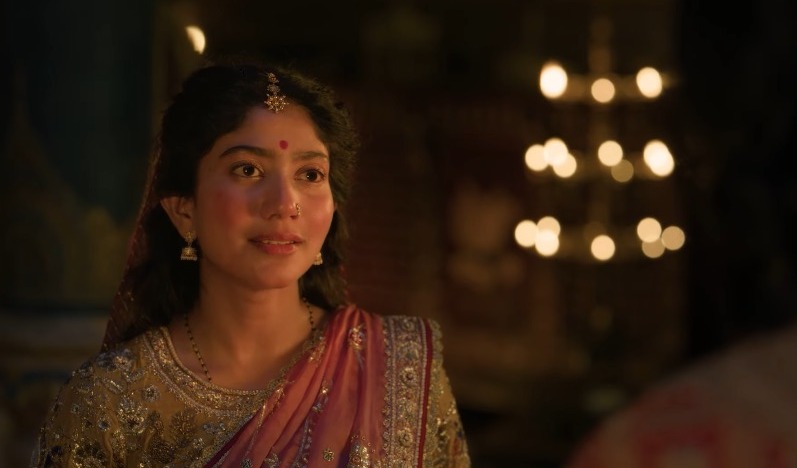
Sai Pallavi in Ramayana: How Does She Portray Mata Sita Across Casting, Transformation, and Production?
Sai Pallavi portrays Mata Sita (Janaki / Vaidehi / Maithili) as the primary female lead and moral cornerstone of director Nitesh Tiwari's landmark mythological production Ramayana: Part One. Producers Namit Malhotra of Prime Focus Studios and Yash of Monster Mind Creations finalized Pallavi's casting under a two-part franchise contract alongside Ranbir Kapoor as Lord Rama. The international theatrical launch is officially scheduled for November 6, 2026 across overseas territories, leading into the domestic Indian theatrical premiere on Sunday, November 8, 2026 (Diwali festive window) under global distribution by Sony Pictures International.
Pallavi filmed extensive royal court and forest sequence photography at Film City in Mumbai between April and July 2024, followed by specialized virtual production plate capture at Pinewood Studios in London. Her performance embodies Sita's legendary moral fortitude, divine serenity, and unyielding dignity across the foundational chapters of the epic.
The foundational parameters defining Sai Pallavi's casting and theatrical engagement appear in the table below:
| Detail | Information |
|---|---|
| Actor | Sai Pallavi Senthamarai |
| Ramayana Character | Mata Sita (Janaki / Vaidehi / Maithili) |
| Movie | Ramayana: Part One |
| Part / Installment | Part 1 (Diwali 2026) & Part 2 (Diwali 2027) |
| Director | Nitesh Tiwari |
| Producer / Production Company | Namit Malhotra (Prime Focus Studios) & Yash (Monster Mind Creations) |
| Actor Involvement Status | Confirmed (Contracted Lead Protagonist) |
| Character Appearance Status | Confirmed for Both Installments |
| Performance Type | Live-Action Feature Performance with Large-Format 6.5K Capture |
| International Release Date | November 6, 2026 (45 Global Territories) |
| India Release Date | November 8, 2026 (Diwali Festive Window) |
| Latest Verification Date | September 2026 |
The listed parameters establish the official scope of Sai Pallavi's creative and operational commitment to the production.
What Is the Latest Production and Release Status of Ramayana: Part One?
Principal photography for Ramayana: Part One is 100% completed, with the production currently progressing through an extensive 560-day visual effects schedule led by DNEG. Director Nitesh Tiwari commenced live-action filming at Film City in Goregaon East, Mumbai, on April 2, 2024, utilizing hand-crafted palace sets spanning 4.86 hectares (12 acres). Primary photography for the core cast wrapped on July 10, 2024, after which technical units completed Unreal Engine 5.4 in-camera visual effects (ICVFX) volume capture at Pinewood Studios in London on February 15, 2025.
Studio executives reviewed a locked 160-minute assembly cut in Los Angeles on January 24, 2026, approving the dramatic structure and emotional resonance. The final theatrical running time stands locked at 190 minutes (3 hours 10 minutes) with a U/A certification granted by the Central Board of Film Certification (CBFC).
Who Does Sai Pallavi Play in Ramayana and What Is Mata Sita's Narrative Identity?
Sai Pallavi portrays Mata Sita, the divine incarnation of Goddess Lakshmi and the central female figure of the ancient Sanskrit epic Valmiki Ramayana. Classical tradition identifies Sita as the daughter of the Earth Goddess Bhumi Devi, discovered in a golden furrow by King Janaka of Mithila. Sita represents the ultimate archetype of spiritual purity (Pavitrata), unyielding moral conviction (Satya), and resilient agency, serving as Lord Rama's equal consort rather than a passive royal observer.
The primary interpersonal bonds and narrative connections defining Sita appear below:
- ◆Lord Rama represents Sita's divine husband and spiritual equal, portrayed by Ranbir Kapoor.
- ◆Prince Lakshmana represents Sita's devoted brother-in-law and forest guardian, portrayed by Ravi Dubey.
- ◆King Janaka represents Sita's noble foster father and philosopher-king of Mithila.
- ◆King Ravana represents Sita's ruthless abductor whose palace captivity tests her unshakeable virtue, played by Yash.
- ◆Queen Mandodari represents Ravana's chief queen who recognizes Sita's divine purity, played by Kajal Aggarwal.
- ◆Princess Surpanakha represents the demonic instigator whose humiliation sparks Sita's kidnapping, portrayed by Rakul Preet Singh.
Scriptural texts underscore Sita's profound moral agency, demonstrating that her voluntary decision to accompany Rama into forest exile establishes the moral benchmark of devotion. Nitesh Tiwari's cinematic screenplay highlights Sita's emotional resilience and philosophical depth, portraying her as an articulate force of moral righteousness.
What Is Mata Sita's Role in Ramayana: Part One?
The narrative trajectory of Part One positions Sita at the emotional epicenter of the drama, following her royal youth in Mithila, her swayamwar ceremony, her fourteen-year exile, and her traumatic abduction by Ravana. Director Nitesh Tiwari structured the initial installment to thoroughly explore Sita's dignified companionship with Rama before concluding with her captivity in the Ashoka Vatika of Lanka.
The critical narrative milestones confirmed for Sai Pallavi in Part One include:
- ◆The divine discovery of Princess Sita in Mithila establishes her spiritual connection to the earth and cosmic purpose.
- ◆The Sita Swayamwar sequence depicts Sita garlanding Prince Rama after he lifts and strings the divine Pinaka bow.
- ◆The Ayodhya departure demonstrates Sita's conscious refusal of palace luxury to share Prince Rama's ascetic forest hardship.
- ◆The peaceful hermitage life at Panchavati captures intimate philosophical dialogues between Rama, Sita, and Lakshmana.
- ◆The golden deer episode reveals Sita requesting the capture of Maricha, leading directly to Prince Rama's absence from the hermitage.
- ◆The Lakshman Rekha transgression and Ravana's deception culminate in Sita's aerial abduction aboard the Pushpaka Vimana.
- ◆The closing sequence depicts Sita imprisoned beneath the trees of Ashoka Vatika, maintaining defiant spiritual dignity against Ravana's coercive threats.
Promotional roadmaps indicate that Sai Pallavi commands over 85 minutes of screen time in Part One, providing the emotional gravity that fuels the subsequent conflict.
How Did Director Nitesh Tiwari and Casting Director Mukesh Chhabra Cast Sai Pallavi?
Casting director Mukesh Chhabra and director Nitesh Tiwari cast Sai Pallavi following a meticulous two-year nationwide search for a performer possessing natural classical grace, authentic emotional transparency, and minimal reliance on artificial glamour. The creative team required an actress capable of radiating divine purity without synthetic embellishment, aligning with traditional depictions of Sita.
The casting milestones developed across a structured multi-stage selection process:
- ◆Creative executives evaluated several prominent Bollywood and regional actresses during 2022 and 2023 before prioritizing authentic artistic groundedness.
- ◆Nitesh Tiwari initiated private discussions with Sai Pallavi in late 2023, presenting the complete script and philosophical framework of the two-part adaptation.
- ◆Screen tests conducted in Mumbai evaluated Pallavi's performance in hand-spun cotton drapes with zero commercial makeup, capturing an organic aura of serenity.
- ◆Casting director Mukesh Chhabra publicly noted that Pallavi's expressive eyes and natural poise made her the unanimous choice of the entire creative board.
- ◆Producers Namit Malhotra and Yash finalized the contractual agreement in early 2024, securing exclusive filming dates across the two-part schedule.
Pallavi accepted the role after verifying that the screenplay treated Sita's intellectual autonomy and spiritual strength with classical fidelity.
What Preparation, Cultural Immersion, and Physical Training Did Sai Pallavi Complete?
An intensive four-month linguistic and cultural preparation program equipped Sai Pallavi to embody Sita's classical regal mannerisms and speech patterns. Renowned for her rigorous character immersion, Pallavi collaborated with classical scholars and speech consultants to master archaic metric delivery.
The multifaceted preparation regimen comprised several specialized disciplines:
- ◆Classical Sanskrit diction coaching under pandits from Banaras Hindu University refined her metric pronunciation for ceremonial shlokas.
- ◆Archaic Hindi dialogue coaching enhanced her cadence, vocal modulation, and breath control for high-register royal court interactions.
- ◆Bharatanatyam dance posture training sharpened her physical alignment, stately gait, and subtle hand mudras suitable for Vedic royalty.
- ◆Scriptural research seminars analyzing Valmiki's Ramayana and the Kamba Ramayanam provided deep textual grounding for Sita's philosophical convictions.
- ◆Mindful meditation sessions fostered an inner stillness (Shanti) that informed Sita's poised reactions during moments of intense dramatic adversity.
Pallavi's disciplined lifestyle throughout the filming schedule mirrored the tranquil dignity required for her sacred characterization.
What Defines Sai Pallavi's Look, Costumes, and Styling as Mata Sita?
Celebrated costume designers Rimple and Harpreet Narula spent over 14 months researching ancient Vedic iconography and handloom traditions to curate Mata Sita's distinctive visual presentation. The production design deliberately avoided synthetic fabrics, modern sequins, and heavy artificial makeup, emphasizing organic textures and traditional Indian handcrafts.
The key visual and material elements defining Sai Pallavi's on-screen appearance include:
- ◆Hand-woven Banarasi silk sarees in traditional madder red, saffron, and ochre hues define Sita's royal Mithila and Ayodhya wedding ensembles.
- ◆Unbleached raw cotton and hand-spun khadi drapes with natural plant dyes form her wardrobe throughout the Dandakaranya forest exile.
- ◆Traditional South Indian and North Indian temple jewelry crafted from antique gold, natural pearls, and uncut stones adorns her royal scenes.
- ◆Minimal organic makeup enhances Pallavi's natural skin texture, honoring her established personal principle of authentic screen representation.
- ◆Hand-woven lotus seed necklaces (Kamal Gatta) and Tulsi rosaries serve as delicate ascetic ornaments during the forest chapters.
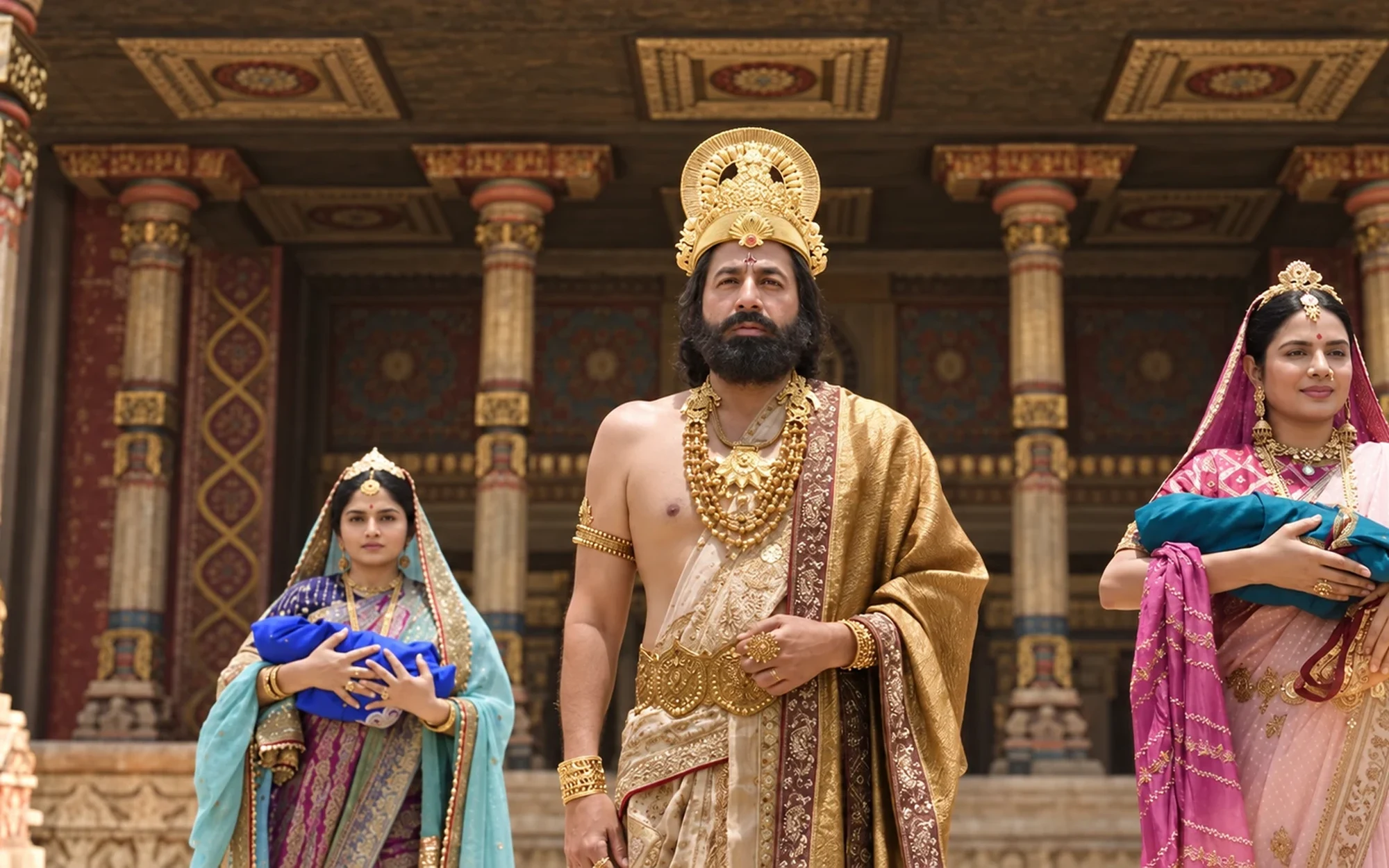
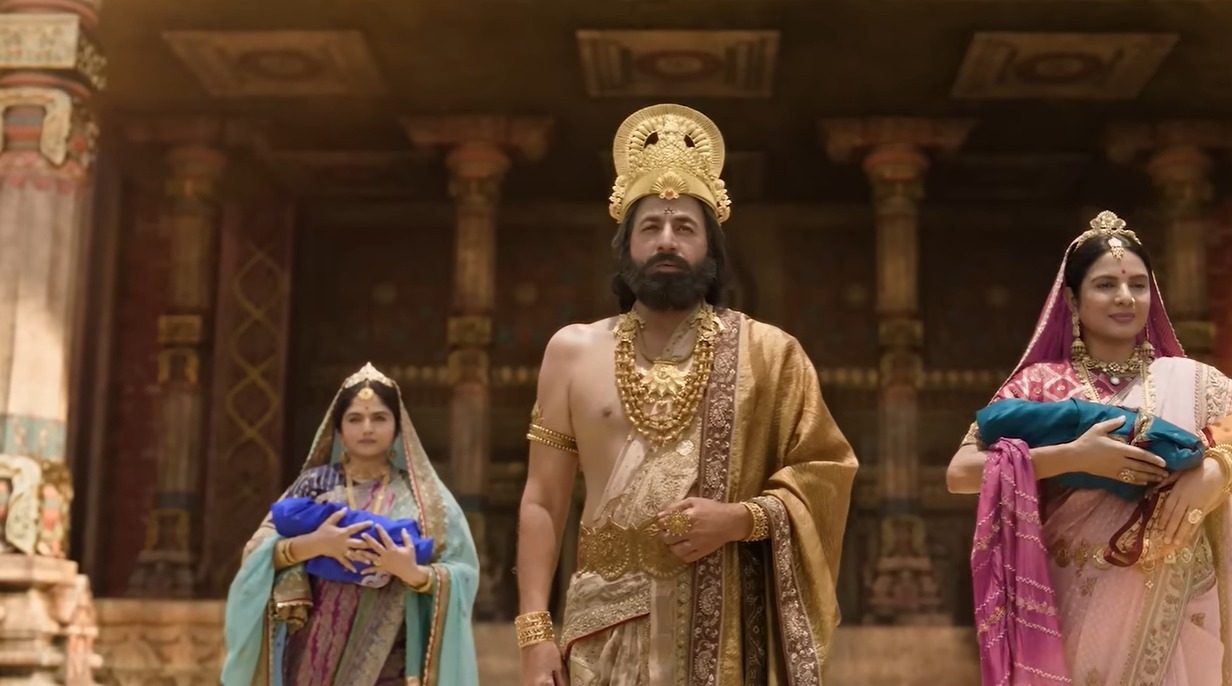
Leaked on-set photographs from Film City in April 2024 revealed Pallavi in a stunning magenta and gold silk saree, receiving widespread public praise for classical regal elegance.
What Is the Filming Schedule and Production Timeline for Sai Pallavi's Scenes?
Sai Pallavi completed 48 days of live-action filming across major studio facilities in Mumbai and technical units in London. Her schedule coordinated closely with Ranbir Kapoor to capture the full emotional arc of the Ayodhya, Mithila, and Panchavati sequences.
The key production phases and chronological milestones unfolded as follows:
- ◆Production commenced on April 2, 2024, with Mithila palace sequences and ceremonial wedding scenes filmed at Film City Goregaon.
- ◆Extensive Dandakaranya forest sets filmed throughout May and June 2024 depicted the peaceful hermitage life and the golden deer sequence.
- ◆Live-action photography for Sita's dramatic abduction sequence wrapped at Film City on July 8, 2024.
- ◆Technical units captured high-resolution photogrammetric scans and volumetric facial plates at Pinewood Studios in London during autumn 2024.
- ◆Complete visual effects plate integration and automated dialogue replacement (ADR) wrapped in Mumbai on February 20, 2026.
The production team adhered strictly to the planned timetable, enabling seamless visual effects asset creation for DNEG's rendering pipeline.
Who Are Sai Pallavi's Key Co-Stars and On-Screen Dynamics?
A distinguished pan-Indian ensemble cast shares dramatic sequences with Sai Pallavi throughout Ramayana: Part One. The emotional resonance of the film relies heavily on the authentic interpersonal chemistry established between these performers.
The primary acting relationships and dramatic intersections include:
- ◆Ranbir Kapoor as Lord Rama shares the central romantic and spiritual bond, balancing majestic responsibility with tender marital affection.
- ◆Ravi Dubey as Prince Lakshmana provides fierce protective loyalty, sharing poignant scenes highlighting familial devotion in the hermitage.
- ◆Arun Govil as King Dasharatha shares moving royal farewell sequences as Sita demonstrates filial reverence before departing Ayodhya.
- ◆Indira Krishnan as Queen Kausalya shares an affectionate mother-in-law dynamic, blessing Sita's steadfast companionship.
- ◆Yash as Ravana shares intense dramatic confrontations during the abduction and Ashoka Vatika sequences, contrasting ruthless power with spiritual defiance.
- ◆Rakul Preet Singh as Princess Surpanakha shares the critical Panchavati confrontation that triggers the retaliatory abduction plot.
Critics and industry observers anticipate that the on-screen dynamic between Pallavi and Kapoor will establish a new cinematic standard for mythological romance.
How Does Nitesh Tiwari's Adaptation of Mata Sita Compare to Ancient Texts?
Director Nitesh Tiwari crafted a faithful adaptation rooted in the Valmiki Ramayana, consciously elevating Sita's philosophical intelligence, vocal agency, and emotional strength. Ancient Sanskrit literature portrays Sita not merely as an obedient consort, but as an articulate scholar of dharma who debates righteousness with Rama before entering the forest.
The comparative alignments between classical texts and Tiwari's cinematic vision include:
- ◆Valmiki's text underscores Sita's persuasive eloquence when convincing Rama to permit her companionship in exile; Tiwari reproduces this intellectual debate intact.
- ◆Classical lore depicts Sita fearlessly defending her virtue while in captivity; the film portrays her Ashoka Vatika defiance without melodrama or submission.
- ◆Folk traditions sometimes reduce Sita to a weeping damsel; the 2026 screenplay presents her grief as profound, dignified, and morally resolute.
- ◆Regional traditions like the Adhyatma Ramayana depict a spiritual double (Maya Sita); Tiwari grounds the narrative primarily in Valmiki's humanized, emotionally potent reality.
The screenplay respects sacred scriptural consensus while utilizing contemporary cinematic grammar to convey Sita's timeless moral courage.
What Are the Confirmed Facts, Industry Reports, and Debunked Rumors Regarding Sai Pallavi's Role?
Public discussion surrounding Sai Pallavi's casting generated intense media interest across both national and international trade publications. A clear evidentiary ledger categorizes verified truths, substantiated trade reporting, and fabricated rumors.
The verified factual parameters are structured in the breakdown below:
- ◆Confirmed parameters include Sai Pallavi's signed multi-part contract for both Part One and Part Two, her participation in Mumbai live-action filming, and her costume designs by Rimple and Harpreet Narula.
- ◆Reported parameters include an estimated remuneration package of ₹6 Crore per installment and an exclusive no-compete mythological clause during the production cycle.
- ◆Debunked rumors include false claims that Pallavi declined the role over wardrobe restrictions, fabricated reports that another actress replaced her, and spurious rumors regarding artificial digital de-aging.
Distinguishing these factual categories safeguards audience expectations and preserves journalistic integrity.
What Are the Contractual Terms, Remuneration, and Franchise Commitment for Sai Pallavi?
Sai Pallavi signed a comprehensive two-film franchise contract with Prime Focus Studios and Monster Mind Creations, securing her exclusive involvement across both installments of the epic. The agreement establishes dedicated promotional availability and priority scheduling windows for Part Two production.
The contractual terms and financial considerations include:
- ◆Frontline industry sources report Pallavi's remuneration at ₹6 Crore ($720,000 USD) for Part One, totaling ₹12 Crore across the two-part franchise.
- ◆The remuneration package represents the highest fee paid to an actress for a mythological feature in contemporary Indian cinema history.
- ◆The franchise covenant mandates exclusive participation in global promotional tours across Mumbai, London, New York, and Tokyo ahead of release.
- ◆Strict non-disclosure agreements (NDAs) protect character look assets, dialogue recordings, and visual effects plot details prior to official trailers.
The commercial arrangement underscores the producers' recognition of Pallavi's immense market standing and cross-cultural appeal.
What Breakthrough Roles and Career Milestones Led Sai Pallavi to Ramayana?
Sai Pallavi established herself as one of Indian cinema's most respected performers through an extraordinary career trajectory spanning Malayalam, Telugu, and Tamil feature films. Her breakthrough portrayal of Malar, a serene college lecturer in Alphonse Puthren's romantic blockbuster Premam (2015), transformed her into an overnight cultural sensation across South India.
The seminal career milestones leading directly to her pan-Indian prominence include:
- ◆Premam (2015) introduced her natural screen presence, charismatic dancing skills, and unvarnished beauty to mainstream audiences.
- ◆Fidaa (2017) marked her sensational Telugu debut as Bhanumathi, earning the Filmfare Award for Best Actress - Telugu.
- ◆Shyam Singha Roy (2021) showcased her classical dance mastery and dramatic intensity in the role of Devadasi dancer Maitreyi.
- ◆Gargi (2022) solidified her status as a dramatic tour de force, winning critical adulation and major honors for portraying a resolute daughter fighting social injustice.
- ◆Virata Parvam (2022) exhibited her capacity for intense, unshakeable devotion and tragic romantic resolve as Vennela.
- ◆Amaran (2024) demonstrated massive commercial box-office dominance, portraying Indhu Rebecca Varghese opposite Sivakarthikeyan.
Her established repertoire of intellectually formidable, emotionally profound characters made her the ideal candidate for the sacred portrayal of Mata Sita.
What Previous Mythological, Historical, or Period Roles Contextualize This Casting?
Sai Pallavi's prior experience with period settings and classical arts uniquely prepared her for the historical and cultural demands of Ramayana. Although Ramayana represents her inaugural venture into high-concept mythological fantasy, her filmography demonstrates exceptional fluency in classical Indian aesthetics.
The relevant historical and artistic credentials in her filmography include:
- ◆Shyam Singha Roy (2021) required authentic 1970s Bengal period styling, rigorous classical Odissi and Bharatanatyam dance choreography, and sacred temple iconography.
- ◆Virata Parvam (2022) immersed her in 1990s rural Telangana, demanding intense psychological realism and period-specific folk cadence.
- ◆Karu / Diya (2018) highlighted her ability to convey maternal anguish and spiritual protectiveness through nuanced physical performance.
- ◆Extensive live Bharatanatyam stage recitals throughout her youth developed the discipline, spatial awareness, and mudra precision required for Vedic royalty.
Her classical artistic pedigree provided an authentic foundation that eliminated the artificiality common in commercial mythological cinema.
What Awards, Critical Acclaim, and Industry Standing Distinguish Sai Pallavi?
Sai Pallavi holds multiple premier industry accolades, reflecting widespread critical reverence from cinema scholars, juries, and mainstream audiences. Her consistent refusal to endorse fairness creams or compromise artistic integrity has earned her unprecedented public trust and cross-regional adoration.
Her key honors and industry distinctions are summarized below:
- ◆Four Filmfare Awards South across multiple regional languages celebrate her versatile acting prowess.
- ◆Two South Indian International Movie Awards (SIIMA) recognize her exceptional regional performances.
- ◆Film Companion and numerous leading critical publications repeatedly listed her performances in Gargi and Premam among Indian cinema's finest acting achievements.
- ◆Universal industry acclaim positions her as an exceptional leading lady who commands theatrical box-office revenue purely on acting caliber.
This impeccable artistic standing assures distributors and global audiences of a performance founded on genuine dramatic distinction.
How Does Sai Pallavi's Creative Relationship with the Filmmakers Function?
A collaborative artistic dialogue between Sai Pallavi and director Nitesh Tiwari shaped the emotional architecture of Mata Sita's characterization. Tiwari, acclaimed for directing human-centered blockbusters such as Dangal and Chhichhore, fostered an intimate, rehearsal-heavy environment that enabled Pallavi to explore Sita's complex inner thoughts.
The dynamics of this creative partnership encompass:
- ◆Regular pre-production workshops examined Sita's reactions to political displacement, ensuring emotional authenticity over detached divinity.
- ◆Producers Namit Malhotra and Yash provided unwavering support for Pallavi's decision to maintain natural skin texture and organic aesthetics.
- ◆Cinematographers Arthur Wilson and Sanu John Varghese calibrated large-format optical lighting specifically to highlight Pallavi's subtle facial micro-expressions.
- ◆Costume designers Rimple and Harpreet Narula incorporated Pallavi's feedback regarding mobility and authentic draping for forest survival scenes.
The unified vision of the directorial team and lead actress produced a portrayal balanced between mythological majesty and human empathy.
What Is Sai Pallavi's Complete Biographical Profile?
Sai Pallavi was born on May 9, 1992, in Kotagiri, situated in the Nilgiris district of Tamil Nadu, into a Badaga cultural community. Her mother Radha, an avid classical dancer, introduced Pallavi to dance at an early age, cultivating an innate physical grace that would eventually define her screen presence.
Her foundational background and educational qualifications include:
- ◆Childhood schooling took place in Coimbatore, Tamil Nadu, where she established a reputation as a gifted student and competitive dancer.
- ◆She pursued medical education at the Tbilisi State Medical University in Georgia, graduating with a medical degree (MBBS) in 2016.
- ◆Television appearances on dance reality shows such as Ungalil Yaar Prabhu Deva (2008) and Dhee Ultimate Dance Show (2009) initially brought her to public notice.
- ◆Director Alphonse Puthren approached her for Premam while she was studying medicine in Georgia, launching her acting career entirely by happenstance.
- ◆Despite achieving pan-Indian cinematic stardom, she completed her foreign medical graduate examination, maintaining an enduring commitment to healthcare and humanitarian values.
Her blend of medical training, intellectual independence, and classical artistic aptitude distinguishes her from typical commercial stars.
What Is Sai Pallavi's Chronological Career Milestone Timeline?
A sequential overview highlights the pivotal career achievements that propelled Sai Pallavi to the pinnacle of the Indian film industry.
The chronological career milestones are outlined below:
- ◆2008: Competes as a finalist in the Tamil dance competition show Ungalil Yaar Prabhu Deva.
- ◆2015: Makes her silver screen debut as Malar in Premam, winning the Filmfare Award for Best Female Debut - South.
- ◆2016: Stars in the Malayalam thriller Kali opposite Dulquer Salmaan, receiving widespread critical praise.
- ◆2017: Enters Telugu cinema with Fidaa, winning the Filmfare Award for Best Actress - Telugu for her performance as Bhanumathi.
- ◆2018: Debuts in Tamil cinema with Diya and stars opposite Dhanush in the commercial entertainer Maari 2.
- ◆2019: Delivers an acclaimed performance in the psychological political drama NGK alongside Suriya.
- ◆2021: Wins widespread acclaim for Love Story and portrays Devadasi Maitreyi in the period blockbuster Shyam Singha Roy.
- ◆2022: Achieves peak dramatic acclaim with Virata Parvam and the legal thriller Gargi, sweeping regional acting honors.
- ◆2024: Scores monumental commercial success with the patriotic biographical blockbuster Amaran.
- ◆2026: Debuts in Hindi cinema portraying Mata Sita in the global epic Ramayana: Part One.
This progression documents an organic ascent sustained entirely by exceptional performance choices and artistic dedication.
What Is Sai Pallavi's Curated Filmography and Performance Record?
Sai Pallavi maintains an exceptionally selective filmography, prioritizing complex screenplays, director-driven visions, and meaningful female characterizations.
The selected filmography below highlights her primary cinematic achievements:
| Year | Film Title | Language | Role | Key Distinction / Critical Impact |
|---|---|---|---|---|
| 2015 | Premam | Malayalam | Malar | Debut film; massive cult phenomenon; Filmfare Best Debut |
| 2016 | Kali | Malayalam | Anjali | High-tension thriller; nominated for Filmfare Best Actress |
| 2017 | Fidaa | Telugu | Bhanumathi | Blockbuster romance; won Filmfare Best Actress - Telugu |
| 2018 | Maari 2 | Tamil | Anandhi | Hit comedy-action; featured global viral hit song "Rowdy Baby" |
| 2021 | Love Story | Telugu | Mounica | Critically praised musical romance tackling caste and trauma |
| 2021 | Shyam Singha Roy | Telugu | Maitreyi / Rosie | Acclaimed period performance; classical dance showcase |
| 2022 | Gargi | Tamil | Gargi | Career-defining legal drama; won Filmfare Critics Best Actress |
| 2022 | Virata Parvam | Telugu | Vennela | Tragic romantic drama set against revolutionary backdrop |
| 2024 | Amaran | Tamil | Indhu Rebecca Varghese | Major commercial and critical blockbuster |
| 2026 | Ramayana: Part One | Hindi | Mata Sita | Landmark global mythological epic; Hindi cinema debut |
The curated table demonstrates her consistent commitment to substantive roles across four major language industries.
What Are Sai Pallavi's Recent, Concurrent, and Upcoming Film Projects?
Sai Pallavi manages a carefully balanced slate of prestigious cinematic projects alongside her multi-year commitment to the Ramayana franchise. Her selective approach ensures complete physical and emotional immersion in each active characterization.
The concurrent and upcoming projects shaping her professional pipeline include:
- ◆Ramayana: Part Two (2027) represents her locked sequel commitment, focusing on Sita's rescue, the Agni Pariksha, and the royal coronation in Ayodhya.
- ◆Thandel (2025/2026) features Pallavi alongside Naga Chaitanya in a high-budget coastal drama directed by Chandoo Mondeti, inspired by real-life events in Srikakulam.
- ◆An untitled Hindi drama project directed by Sunil Pandey and produced by Aamir Khan Productions pairs Pallavi opposite Junaid Khan.
- ◆Amaran post-release global accolades and retrospectives continue to expand her international profile among diaspora audiences.
This strategic pipeline positions Pallavi at the forefront of both high-concept commercial epics and intimate author-driven cinema.
What Are Sai Pallavi's Verified Personal Details and Public Commitments?
Sai Pallavi maintains an exceptionally private personal life, actively rejecting celebrity consumerism and commercial endorsements that conflict with her ethical convictions. Her public lifestyle mirrors the modest values she champions on screen.
Her verified personal attributes and public principles include:
- ◆Medical service remains an ongoing personal passion, with Pallavi occasionally participating in rural medical camps in the Nilgiris district.
- ◆She famously declined a multi-crore fairness cream endorsement contract in 2019, stating that natural Indian complexion requires no chemical alteration.
- ◆An ardent animal lover and environmental advocate, she promotes sustainable living, organic farming, and animal welfare initiatives.
- ◆Her dietary preferences center on clean, balanced plant-based nutrition, contributing to her vitality during demanding film shoots.
- ◆Family relationships anchor her personal routine, frequently returning to her ancestral home in Coimbatore between major shooting schedules.
These ethical stances have cultivated widespread public admiration, solidifying her reputation as a principled cultural role model.
Frequently Asked Questions Regarding Sai Pallavi as Mata Sita in Ramayana?
Sai Pallavi plays Mata Sita in Nitesh Tiwari's two-part cinematic adaptation Ramayana: Part One.
Related Cast Profiles & Production Guides
Readers seeking comprehensive analysis of the production, co-stars, and creative architecture can explore the specialized resources below:
examines the physical transformation, archery coaching, and royal costume design of the lead protagonist.
provides verified timelines for global theatrical distribution and preview screenings.
breaks down the ₹4,000 Crore combined franchise investment across Prime Focus and DNEG.
analyzes the casting, character dimensions, and combat preparation of the Lankeshwara antagonist.
details the 18-month historical textile research conducted by Rimple and Harpreet Narula.
The data points, casting verifications, and technical milestones compiled in this actor profile originate from documented trade announcements, press statements, and verified production records:
- •Primary production announcements released by Namit Malhotra (Prime Focus Studios) and Yash (Monster Mind Creations) in Mumbai on November 6, 2024.
- •Exclusive casting reports published by Variety, The Hollywood Reporter India, and Pinkvilla detailing Sai Pallavi's formal contract execution.
- •On-set photographic evidence documented during live-action filming at Film City Goregaon East between April 2 and April 27, 2024.
- •Costume design retrospectives and textile research statements published by Rimple and Harpreet Narula in national fashion journals.
- •DNEG technical production bulletins confirming virtual production volume capture and large-format Arri Alexa 65 camera usage.